SWEDISH DESIGN & TRADITIONS
The History of the Dala Horse—From Wooden Toy to Swedish National Symbol
The red Dala horse is one of Sweden’s most beloved symbols. But how did a simple wooden toy from the forests around Mora become a world-famous symbol of Swedish tradition, design, and craftsmanship?
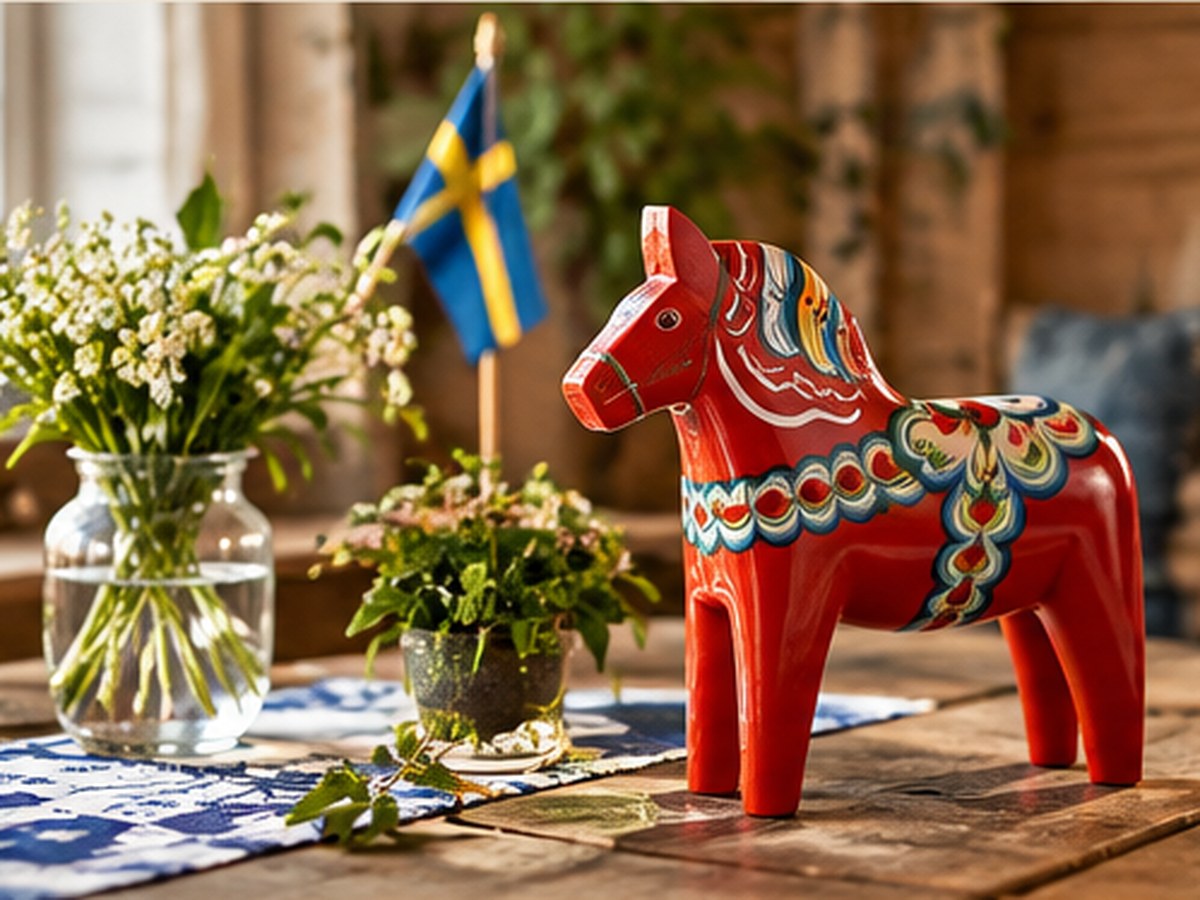
The history of the Dala horse is the story of a genuine Swedish craft that has been passed down through generations. From the 18th-century log cabins to today’s workshops in Nusnäs outside Mora, the little wooden horse has evolved into a cherished part of our cultural heritage.
The Dala Horse at a Glance
Origin: The villages around Mora in Dalarna
History: At least since the 18th century
Craft: Woodcarving and hand-painted curlicue decoration
Well-known production site: Nusnäs
International breakthrough: New York, 1939
The Origins of the Dala Horse—A Story from the 18th Century
The story begins in Dalarna, in the villages around Mora. As early as the 18th century, small wooden horses were crafted by people working in the forest.
When the workday ended and darkness fell over the forests, the loggers gathered in their log cabins. Using simple tools and pieces of wood, they began carving small figures to pass the time.
The horse was a natural motif. It played a central role in Swedish peasant society and was indispensable in both agriculture and forestry. The small wooden horses became cherished toys that the workers could take home to their children.
Over time, traveling peddlers began selling the wooden horses on their journeys. As a result, the craft spread far beyond the villages around Mora.
Why is the Dala horse red?
Today, most people associate the Dala horse with its characteristic reddish-orange color and decorative patterns. But the earliest wooden horses were much simpler and could be completely unpainted.
During the 19th century, the tradition of painting the horses developed. In the 1830s, they began to feature more and more of the colorful decoration we associate with the classic Dala horse.
The red color eventually became the most recognizable version. But traditional Dala horses also come in blue, black, white, and several other colors.
"From a simple wooden toy to one of Sweden’s most beloved symbols."
Kurbits and krusmålning—a unique Swedish craft
One of the Dala horse’s most distinctive features is its decorative painting, featuring winding shapes, leaves, and flower-like ornaments.
The patterns have strong ties to Dalarna’s folk decorative painting and the tradition often referred to as kurbits painting.
The distinctive brushwork on Dala horses is called krusmålning. It is executed with great skill by experienced painters.
Since the decoration is painted by hand, each horse has slight individual variations. This is an important part of the Dala horse’s charm and artisanal value.
Nusnäs – The Heart of the Dala Horse
Just outside Mora lies the small village of Nusnäs, which has become internationally known for its production of Dala horses.
In 1928, Nils Olsson Dalahästar was founded, a business that would go on to play a significant role in the development of this traditional craft.
Dala horses are still made in Nusnäs today. Visitors can watch the artisans at work and see how they shape and decorate the horses.
Read more at Visit Dalarna about the history of the Dala horse and Nusnäs.
1939 – The Year the Dala Horse Conquered the World
A pivotal moment in the history of the Dala horse occurred at the 1939 World’s Fair in New York.
A large red Dala horse was placed at the entrance to the Swedish pavilion. The colorful figure attracted attention and helped the Dala horse achieve its international breakthrough.
Having previously been a regional craft, the Dala horse now became increasingly known as a symbol of Sweden. It became a popular souvenir, a representative gift, and a symbol of Swedish culture and tradition.
The Dala Horse’s Journey Through History
Wooden horses were carved in the villages around Mora and became popular toys.
The horses began to feature colorful, traditionally inspired decorations.
Nils Olsson Dalahästar begins operations in Nusnäs.
The Dala horse makes its international debut in New York.
A living craft tradition and one of Sweden’s most recognizable symbols.
How is a traditional Dala horse made?
Behind every classic Dala horse lies a series of steps in which craftsmanship and experience play a crucial role.
01 The wood is selected.
A suitable piece of wood is prepared for production.
02 The basic shape is cut out.
The wood is shaped into the horse’s characteristic silhouette.
03 The horse is carved.
The artisan shapes the horse and adds the final details.
04 The base coat is applied.
The horse is painted, often in the classic reddish-orange color.
05 The decorative painting is applied.
The decorative painting gives each horse its own unique character.
06 The horse receives its final finish.
The surface is protected to preserve the colors and decoration.
The result is not just a beautiful wooden figure, but a handcrafted object with a long history.
Experience the history of the Dala horse in Dalarna
For those interested in Swedish history and traditional crafts, there are several exciting places to visit.
Nusnäs outside Mora
Here you can witness the making of classic Dala horses and see how the craft tradition lives on.
The Dalarna Museum in Falun
The Dalarna Museum houses an extensive collection of Dala horses in various colors, shapes, and sizes. The exhibition shows how the craft has evolved throughout history.
The World’s Largest Dala Horse in Avesta
In Avesta stands an impressive Dala horse that is 13 meters tall. It has become a well-known landmark and a popular photo spot.
Find more visitor tips at Visit Dalarna.
The Dala Horse in Modern Swedish Design
The Dala horse not only holds a natural place in Swedish history; it also continues to inspire modern designers.
The characteristic horse silhouette and decorative kurbits patterns are used today on everything from textiles and interior design details to gifts and souvenirs.
At Sweden Souvenirs, we’ve curated a collection where classic Swedish tradition meets modern and functional design.
SWEDISH TRADITION IN YOUR HOME
Discover the Dala Horse at Sweden Souvenirs
From classic artisanal motifs to modern home decor products. We bring the Dala Horse’s timeless design to life in products that can be used and enjoyed every day.
Explore our Dala Horse collection – No. 1 Symbol of Sweden →
The Dala Horse as Home Decor and a Gift
The classic Dala Horse is a cherished gift for both Swedish and international recipients. It fits just as well in a modern home as it does in a traditional Swedish cottage.
A lantern, a decorative matchbox, or a textile product featuring a Dala Horse motif can make a wonderful gift for someone who appreciates Swedish design, tradition, and cultural heritage.
Frequently Asked Questions About the Dala Horse
Where does the Dala horse come from?
The Dala horse comes from Dalarna and has its historical origins in the villages around Mora. Today, Nusnäs is particularly well-known for its production.
How old is the Dala horse?
The tradition of carving wooden horses in Dalarna dates back to at least the 18th century. The decorated Dala horse developed primarily during the 19th century.
Why does the Dala horse have kurbits patterns?
The decoration is inspired by Dalarna’s traditional folk painting. This distinctive curvilinear painting style has become one of the Dala horse’s most characteristic features.
Why is the Dala horse a symbol of Sweden?
The Dala horse represents Swedish craft traditions and culture. It achieved international recognition at the 1939 World’s Fair in New York.
Are Dala horses still made by hand?
Yes, traditional Dala horses are still made with extensive handwork, including carving and decorative painting.
A Swedish tradition to carry on
From the first wooden horses in the forests around Mora to today’s hand-painted Dala horses, the tradition has lived on through generations.
The Dala horse combines Swedish history, colorful design, and genuine craftsmanship.
Discover our Dala horse products →Sources and Further Reading
Historical information has been sourced from, among other places, Visit Dalarna – The History of Dala Horses.